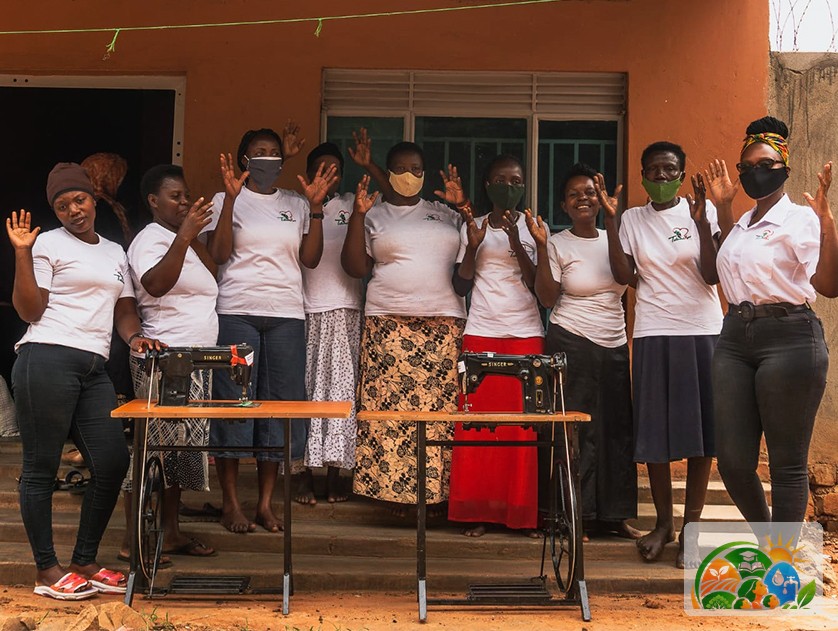
In Kakamega, women often carry the household economy with irregular earnings, limited collateral and heavy care duties. This insight shows why skills, savings groups and micro-enterprise support matter, and how partners can fund a first phase with Vision Giver Project.
The problem
Agriculture and informal trade dominate rural livelihoods. Women are central to food production and household cash flow, yet face constrained land rights, weak access to affordable credit, limited processing and marketing power, and gender norms that keep returns low.
- Kakamega technical policy analysis notes high poverty, food insecurity and climate pressure in county agriculture, with women dominant in value chains (over 61% in the studied chains) while facing weak organisation, limited processing capacity and poor market power. See the Kakamega County technical policy brief (KIRDI).
- Research with women chama members in Kakamega links gender-role constraints to limited land, finance and technology access, and shows how group membership can improve bargaining power and household food security. See Ibrahim et al. (2024).
- Community documentation from Kakamega savings groups shows members using pooled contributions for shocks, school needs and small business activity when formal credit is hard to reach. See KCDF field feature.
These sources describe county and study contexts. They are not a substitute for Vision Giver group-level baselines and enterprise tracking.
The human impact
Illustrative scenario informed by published research and community context
A mother sells vegetables for three strong market days, then loses a week to rain damage or illness. Without savings or a group loan, school fees slip and the household eats down. A sewing order or beadwork contract can close the gap, but only if she has a machine, materials and a market.
When women's earnings rise and stabilise, children are more likely to stay in school and households have more room to refuse harmful coping choices. Economic pressure alone does not cause every protection risk, but it often narrows the options families see.
Why this matters
- Household resilience: diversified income softens climate and market shocks.
- Education: steadier cash flow supports school costs.
- Food security: women with capital and skills can produce and purchase more reliably.
- Agency: own income strengthens a woman's room to decide for herself and her children.
What Vision Giver is doing
Vision Giver Project is a community-based organisation in Kakamega County, Kenya, presented in our materials as a Public Benefit Organisation (PBO). Review our organisational profile and confirm registration particulars against the official certificate before contracting. See also PBORA.
Livelihoods work is linked to education and protection goals: skills are not an end in themselves when the household still cannot keep a girl in school.
| Intervention | Expected benefit | Status |
|---|---|---|
| Vocational skills (tailoring, hairdressing, beadwork, agribusiness) | Practical income pathways for women and women's groups | Program focus underway |
| Financial literacy and savings-group strengthening | Better cash management, group lending and shock response | Program focus underway |
| Start-up tools and working capital support | Skills convert into actual enterprises | Needs funding |
| Market linkages and value-addition coaching | Stronger prices and less dependence on middlemen | Needs funding |
| Linked education support for members' children | Livelihood gains protect schooling | Needs funding |
The change we want to create
Design targets, not achievements. Near-term targets for a Kakamega women's livelihoods package.
How we will measure progress
- Women completing skills modules and receiving start-up support
- Active savings-group membership and loan repayment records
- Enterprises still operating at 6 and 12 months
- Self-reported use of income for food and school costs
First-phase funding opportunity
Indicative cost share
Provisional shares pending group selection and partner agreements.
- Skills training and facilitation~30%Trainers, venues, materials and coaching
- Start-up tools and capital~35%Machines, kits and working capital support
- Savings-group and market support~15%Financial literacy, group systems and market links
- Monitoring and learning~10%Baselines, enterprise tracking and reports
- Coordination and accountability~10%Project management and financial controls
An opportunity to create lasting change
We are seeking partners to finance skills, tools and savings-group systems that help women earn more reliably and protect their children's schooling.
An invitation to partners
Funding partners
Finance skills cohorts, start-up kits and savings-group strengthening in named Kakamega wards.
Discuss a funding packageImplementation partners
Co-deliver training, market linkages and enterprise mentoring with local groups.
Propose a joint delivery modelCorporate and institutional partners
Contribute tools, materials, technical coaches or multi-year livelihood sponsorship.
Explore institutional partnershipAbout the organisation
- Organisational profile
- Contact: Damaries Achieng Ochogo · contact@visiongiverproject.org · +254 726 506 342
Selected sources
- Kakamega County technical policy brief (KIRDI). Agricultural value-chain constraints and women's participation.
- Ibrahim et al. (2024). Women's gender-role perceptions, chama membership and household food security in Kakamega.
- KCDF. Community savings groups in Kakamega and household resilience.
Partner with Vision Giver Project to fund practical livelihood pathways for women in Kakamega.