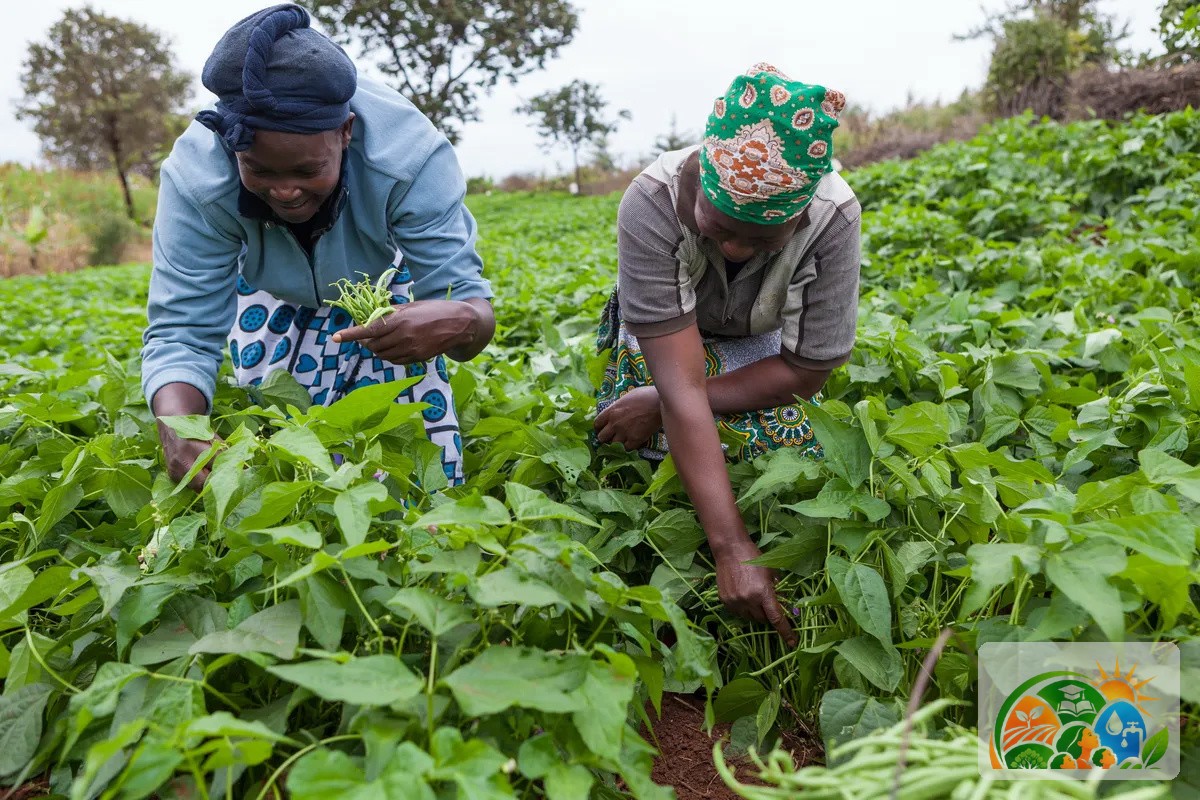
When rains delay or soils tire, the first crisis is often on the plate. Women farmers in Kakamega and neighbouring counties absorb climate shocks through thinner meals, harder labour and difficult choices about school and work. This insight sets out the evidence and a fundable first-phase response.
The problem
Western Kenya households depend heavily on rain-fed farming. Climate variability, limited processing capacity and weak market power reduce food availability and income at the same time. Women often manage farms day to day while facing constrained land rights, finance and technology access.
- Research on Kakamega women farmers documents how climate shocks affect food security and sovereignty, and how women move from short-term coping to adapted farming and network-based support. See Building Resilience... in Kakamega (Sustainability, 2021).
- Related Kakamega work shows women using social capital (bonding, bridging and linking ties) to adapt livelihoods under climate pressure. See Nairobi Journal of Humanities and Social Sciences.
- County agricultural policy analysis highlights poverty, food insecurity and climate impacts alongside weak value addition and marketing for local chains. See the Kakamega County technical policy brief.
These findings describe researched community and county contexts. Vision Giver will pair them with farm-group baselines before claiming local results.
The human impact
Illustrative scenario informed by published research and community context
A mother watches the planting window slip. She stretches beans and maize, skips a market day to dig again, and keeps a child home when food and school costs collide. Neighbours in a women's group may share seed, labour or a small loan. Without that network, the household absorbs the shock alone.
Climate stress does not automatically cause school dropout or harmful coping. It can, however, intensify the pressures that already place women and children at risk.
Why this matters
- Nutrition: stable farms protect children's meals.
- Income: surplus and diversified crops fund household essentials.
- Education: fewer hunger-driven absences and fee crises.
- Climate readiness: adapted practices reduce repeated emergency need.
What Vision Giver is doing
Vision Giver Project is a community-based organisation in Kakamega County, Kenya, presented in our materials as a Public Benefit Organisation (PBO). Review our organisational profile and confirm registration particulars before contracting. See also PBORA.
Agriculture and environment work is tied to women's livelihoods and children's wellbeing, not treated as a separate "green" project.
| Intervention | Expected benefit | Status |
|---|---|---|
| Climate-smart and drought-aware farming practices | More stable yields when seasons shift | Program focus underway |
| Women farmer-group training and peer learning | Local knowledge networks that outlast one project cycle | Program focus underway |
| Seed, tools and demonstration support | Faster adoption of practical adaptations | Needs funding |
| Agroforestry and soil-care practices | Longer-term farm resilience and environmental recovery | Needs funding |
| Links to markets and household nutrition guidance | Food produced can also become reliable income and better meals | Needs funding |
The change we want to create
Design targets, not achievements. Near-term targets for a climate-and-food partnership package.
How we will measure progress
- Households adopting at least two agreed climate-smart practices
- Active women farmer-group participation
- Seasonal food and seed self-reporting before/after support
- Partner reports separating spend, activities and outcomes
First-phase funding opportunity
Indicative cost share
Provisional shares pending site selection and technical design.
- Training and farmer-group facilitation~25%Extension support, peer learning and demos
- Inputs, tools and demonstration sites~40%Seed, tools, agroforestry and plot support
- Market and nutrition linkages~15%Post-harvest, marketing and household nutrition
- Monitoring and learning~10%Baselines and partner reporting
- Coordination and accountability~10%Project management and financial controls
An opportunity to create lasting change
We are seeking partners to finance climate-ready farming with women at the centre, so food and school costs are less hostage to the next failed season.
An invitation to partners
Funding partners
Finance farmer training, inputs, demonstration sites and women-group strengthening.
Discuss a funding packageImplementation partners
Bring agronomy, climate advisory and market systems support into joint delivery.
Propose a joint delivery modelCorporate and institutional partners
Contribute inputs, technical expertise or multi-year climate-resilience sponsorship.
Explore institutional partnershipAbout the organisation
- Organisational profile
- Contact: Damaries Achieng Ochogo · contact@visiongiverproject.org · +254 726 506 342
Selected sources
- Nyahunda et al. / Sustainability (2021). Gendered climate effects on food security and sovereignty in Kakamega.
- Social capital, climate adaptation and women farmers in Kakamega. Nairobi Journal of Humanities and Social Sciences.
- Kakamega County technical policy brief. Agriculture, value chains, poverty and climate pressure.
Partner with Vision Giver Project to fund practical adaptation that protects meals, income and schooling.